
Snus is a moist tobacco pouch you place under your upper lip. It originated in Sweden and releases nicotine slowly through your mouth lining. The term gets thrown around a lot, but here's the catch. What most people call snus in the UK is actually tobacco-free nicotine pouches. Real tobacco snus has been banned here since 1992. This confusion matters because the products are different, the laws vary, and your choices depend on understanding what you're actually buying.
This guide breaks down everything you need to know about snus and its alternatives. You'll learn why tobacco snus differs from other nicotine products, how UK law affects what you can buy, and what the research says about health effects. We'll compare snus to nicotine pouches and vaping so you can see your options clearly. Whether you're curious about these products, looking for cigarette alternatives, or trying to make sense of what's legal, you'll get straight answers without the marketing nonsense. Let's clear up the confusion and look at the facts.
Why snus is different from other nicotine
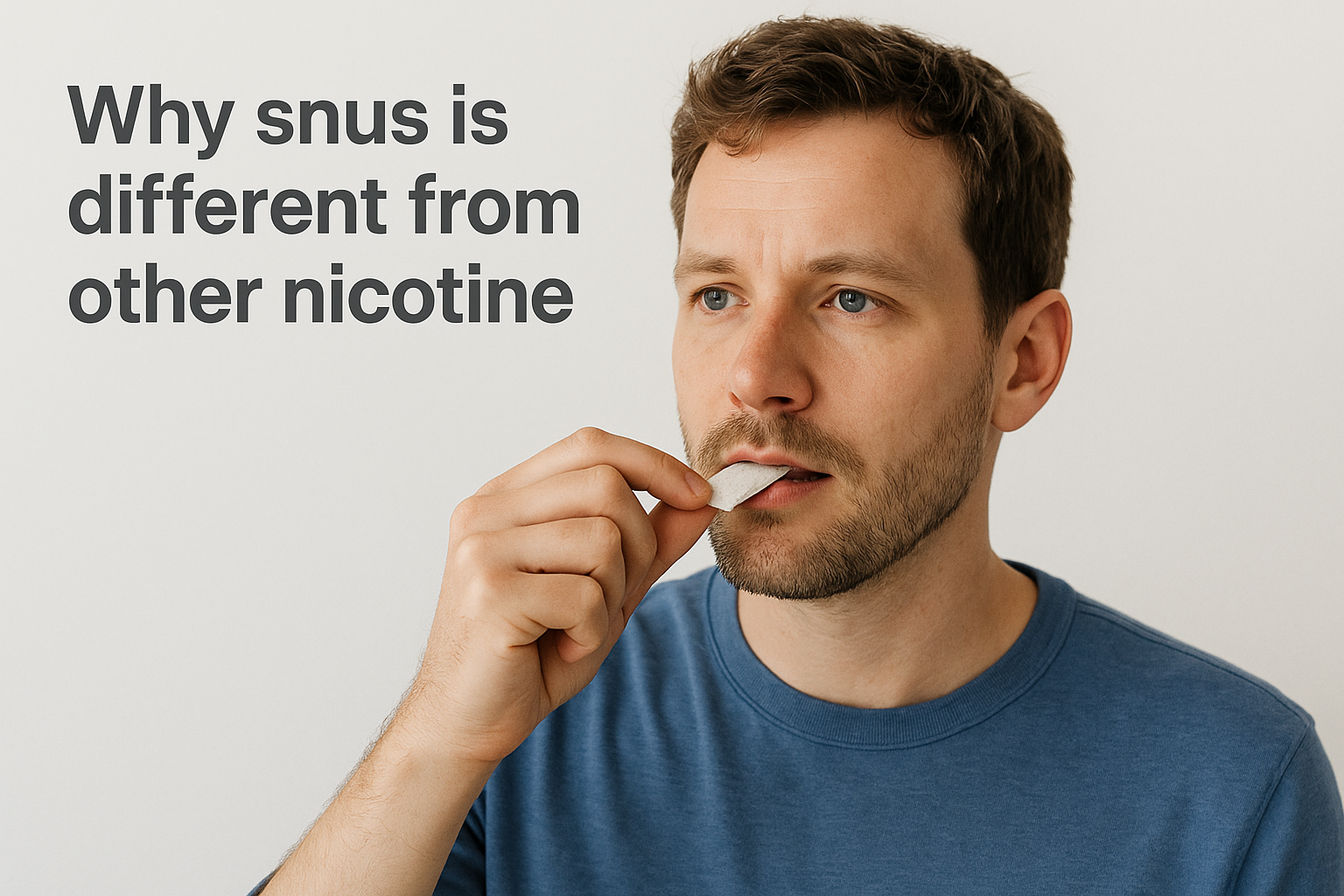
Snus stands apart from cigarettes, vaping, and nicotine replacement products because of how it delivers nicotine and what it contains. You don't smoke it, inhale it, or swallow it. Instead, you place the pouch between your upper lip and gum, where nicotine absorbs through the oral mucosa directly into your bloodstream. This smokeless method means no combustion happens, which eliminates the tar and toxic chemicals that come from burning tobacco. Traditional Swedish snus contains pasteurised tobacco, not fermented like other smokeless products, giving it a distinct moisture level and flavour profile.
The absorption method sets it apart
Your mouth absorbs nicotine from snus gradually over 30 to 60 minutes, creating a sustained release rather than the instant spike you get from cigarettes. This slower absorption means you experience less intense peaks and troughs in nicotine levels throughout the day. Cigarettes deliver nicotine to your brain in seconds through your lungs, while snus takes several minutes to reach peak levels through your oral tissue. You also avoid the hand-to-mouth ritual and social stigma associated with smoking, making snus more discreet in public settings.
Traditional snus provides steady nicotine delivery without the rapid absorption that makes cigarettes highly addictive.
No vapour or smoke changes the experience
Unlike vaping devices that heat liquid into vapour, snus requires no battery, no charging, and no visible exhale. You won't produce clouds, smell of smoke, or need to step outside in most situations. The product sits quietly under your lip, releasing nicotine without drawing attention. This makes it fundamentally different from both combustible tobacco and electronic alternatives. You're not inhaling anything into your lungs, which changes the entire risk profile compared to smoking or vaping.
How to navigate snus and UK law
The UK banned tobacco snus in 1992 under EU regulations, and that ban remains in place today even after Brexit. You cannot legally buy, sell, or import traditional Swedish tobacco snus anywhere in the United Kingdom. The Tobacco and Related Products Regulations 2016 specifically prohibit oral tobacco products across all UK nations, with penalties for retailers who break this law. Only Sweden holds an exemption from this EU-wide ban, which means Swedish manufacturers can produce and sell tobacco snus domestically but cannot export it to Britain.
What you can legally buy instead
Tobacco-free nicotine pouches fill the gap left by the snus ban because they contain no tobacco leaf. These products use plant-based fibres infused with nicotine extracted from tobacco plants or synthesised in laboratories. UK law treats them differently from tobacco products, placing them under general consumer safety regulations rather than tobacco-specific rules. You'll find brands like Nordic Spirit, Velo, and Zyn legally available in shops and online stores throughout Britain. The products look similar to traditional snus pouches and work the same way, but their tobacco-free composition keeps them on the right side of the law.
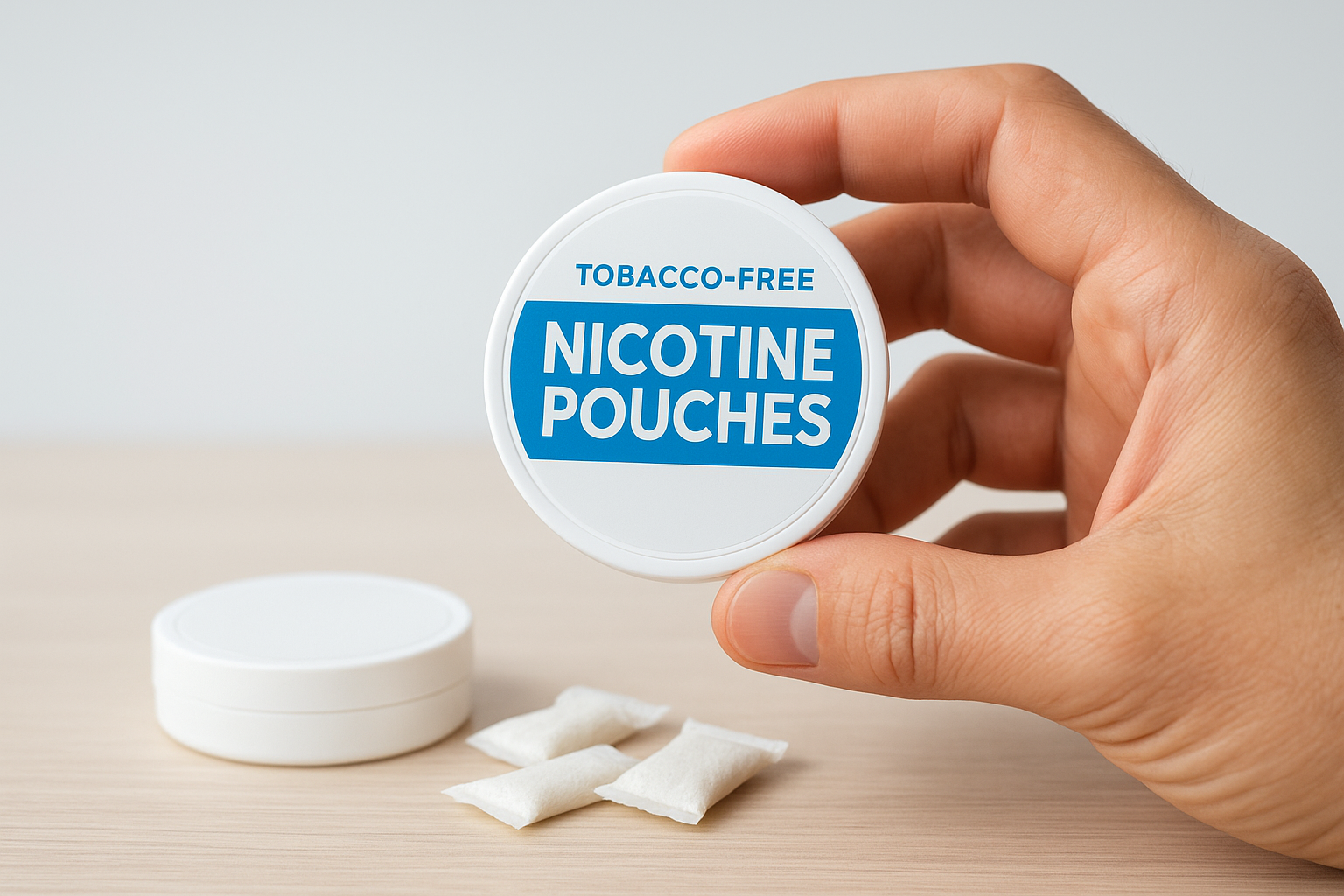
Nicotine pouches remain legal in the UK because they contain no tobacco, despite delivering similar nicotine levels to banned snus products.
Age verification and retail compliance
Retailers must verify you're 18 years or older before selling nicotine pouches, even though current law doesn't mandate this requirement as strictly as it does for tobacco or nicotine-containing vapes. Responsible sellers implement two-stage age verification systems for online purchases and check ID in physical stores. The proposed Tobacco and Vapes Bill aims to regulate nicotine pouches more strictly, potentially bringing them under the same age-of-sale enforcement as cigarettes. You should buy from established UK retailers who follow voluntary age restrictions and provide proper product information, batch testing results, and clear labelling on nicotine content.
Snus effects and health considerations
Using snus affects your body from the moment you place the pouch under your lip, and the long-term implications matter if you use it regularly. Nicotine itself is a highly addictive stimulant that acts on your cardiovascular system and brain, regardless of whether it comes from tobacco snus or tobacco-free pouches. Your experience will vary based on nicotine strength (ranging from 5mg to 20mg per pouch in most products, though some exceed 100mg), your tolerance level, and how long you keep the pouch in place. Understanding both immediate effects and potential long-term risks helps you make informed decisions about whether these products suit your situation.
Short-term effects you might experience
Your heart rate and blood pressure typically increase within minutes of placing a snus pouch in your mouth, as nicotine enters your bloodstream and triggers your sympathetic nervous system. You might feel more alert and focused initially, which explains why some people use nicotine as a cognitive enhancer, though research on performance benefits remains limited. First-time users often report dizziness, nausea, or headaches when they start, especially with higher-strength products. Your gums may feel irritated where the pouch sits, and you'll produce more saliva as your mouth responds to the foreign object and nicotine content.

Long-term health risks to consider
Regular snus use carries genuine health concerns even without combustion. The nicotine itself puts strain on your cardiovascular system over time, potentially increasing risks for people with existing heart conditions, high blood pressure, or circulatory problems. Research on tobacco snus shows associations with gum recession, oral lesions, and increased pancreatic cancer risk, though these risks appear lower than smoking. Tobacco-free nicotine pouches lack long-term studies, but experts warn that the high nicotine content and prolonged oral exposure could cause localised gum disease where you consistently place the pouch.
Nicotine's cardiovascular effects persist regardless of delivery method, making it particularly risky for pregnant women, young people, and those with heart conditions.
What the research actually shows
Studies comparing tobacco snus to cigarettes consistently find substantially lower harm from snus because it eliminates combustion-related toxins like tar and carbon monoxide. A systematic review found weak evidence that snus helps people quit smoking, while a 2010 comparison suggested snus simply maintains nicotine dependence rather than ending it. The German Federal Institute for Risk Assessment concluded that high nicotine levels pose the main risk in nicotine pouches, creating strong cardiovascular effects and particular dangers for vulnerable groups. You won't find reliable evidence supporting nicotine's performance-enhancing benefits in sports despite marketing claims, and the lack of published data on nicotine pouches means we're still learning about their specific oral health impacts.
Compare snus, nicotine pouches and vaping
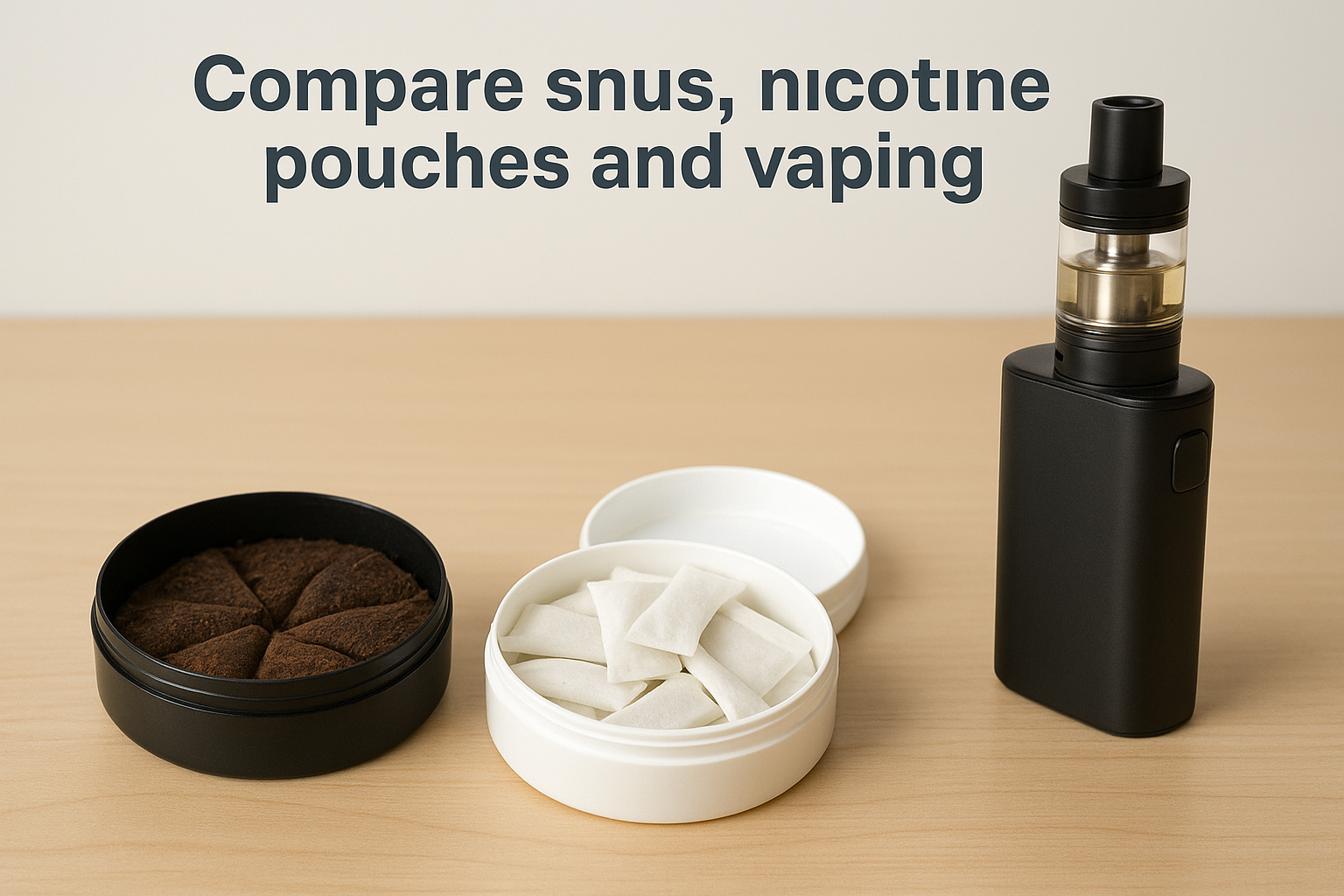
You need to understand the practical differences between these three nicotine delivery systems to make informed choices. Traditional tobacco snus contains ground tobacco leaves and remains banned in the UK, while tobacco-free nicotine pouches use plant fibres with added nicotine and stay legal. Vaping devices heat liquid containing nicotine into vapour you inhale, creating an entirely different experience from oral products. Each method affects your body differently, costs varying amounts over time, and fits into your lifestyle in distinct ways.
Delivery methods and ingredients
Nicotine pouches and snus both sit under your lip for 30 to 60 minutes, releasing nicotine through your oral mucosa without any inhalation. You don't swallow the pouch or produce any visible exhale, making these products highly discreet in public settings. Vaping requires you to inhale vapour into your lungs, which delivers nicotine faster than oral pouches but slower than cigarettes. The ingredients differ substantially: tobacco snus contains actual tobacco along with water, salt, and flavourings; nicotine pouches use cellulose fibres with synthetic or extracted nicotine; and vape liquids combine propylene glycol, vegetable glycerin, nicotine, and flavourings.
Each delivery method creates different absorption rates and experiences, affecting both nicotine satisfaction and potential health impacts.
Cost and convenience factors
Your ongoing costs vary significantly between these options. Nicotine pouches typically cost £3 to £5 per tin containing 20 pouches, with each pouch lasting up to an hour. Vaping requires an initial device investment of £15 to £100 plus ongoing liquid costs of roughly £5 to £15 per week depending on your usage. You'll also need to charge vape batteries and occasionally replace coils or pods, adding maintenance tasks that pouches don't require. Pouches need no preparation, produce no waste beyond the small sachet, and work immediately without power. Vaping gives you more control over nicotine strength through liquid selection and allows you to adjust vapour production, but it demands more attention and upkeep than simply placing a pouch in your mouth.
Choosing safer alternatives to snus
Moving away from tobacco snus or reducing nicotine dependence altogether requires understanding your available options in the UK market. Your safest choice involves stopping nicotine use entirely, but if you're seeking harm reduction alternatives, you need products that meet UK regulatory standards and come from verified suppliers. The alternatives you choose should match your current nicotine needs while potentially helping you reduce intake over time.
Tobacco-free nicotine pouches offer direct substitution
Nicotine pouches provide the closest experience to traditional snus without the tobacco content that makes snus illegal in Britain. You'll find products from established brands like Nordic Spirit, Velo, and Zyn at reputable UK retailers who verify ages and provide batch-tested products with clear nicotine labelling. These pouches let you control your nicotine strength, starting with levels that satisfy your current needs and potentially stepping down to lower concentrations. Choose retailers who follow voluntary regulations and provide transparent information about ingredients and nicotine content.
Selecting tobacco-free alternatives from verified UK suppliers ensures you get legally compliant products that meet basic safety standards.
Regulated vaping provides another path
Vaping devices offer a different harm reduction route if oral products don't suit you. UK-regulated vapes must comply with strict TRPR requirements including maximum nicotine concentrations of 20mg/ml, childproof packaging, and safety testing. You control your nicotine intake through liquid selection and can gradually reduce strength over time if that's your goal.

Final thoughts on snus
Understanding what snus actually is and its legal status helps you navigate the UK nicotine market with genuine confidence. Traditional tobacco snus remains banned across Britain under long-standing regulations, but tobacco-free nicotine pouches provide a legal alternative that delivers similar experiences without breaking the law. You've learned how these products differ from vaping and smoking, discovered what research actually says about their health effects, and understood what UK regulations mean for your purchasing choices. Making informed decisions about nicotine products requires knowing exactly what you're buying and where legitimate, compliant products come from.
If you're ready to explore verified alternatives, browse our selection of UK-compliant nicotine pouches with proper age verification and transparent labelling.