
Most advice about vaping tends to overlook the rapid shift in British smoking habits over the past decade. With more than 3.2 million British adults now choosing vaping as a harm reduction strategy, the conversation has moved far beyond mere trend. Understanding what vaping really means, how the technology works, and how it fits into British regulation can help cut through the confusion and highlight facts that matter for both new users and curious observers.
Table of Contents
- Vaping Defined: Origins And Key Concepts
- Types Of Vaping Devices And E-Liquids
- How Vaping Devices Work In Practice
- Uk Vaping Laws And Regulatory Standards
- Health Risks, Myths And Public Perceptions
Key Takeaways
| Point | Details |
|---|---|
| Vaping Evolution | Vaping has evolved from cannabis use to a broad alternative for nicotine consumption, reinforcing its position as a transformative cultural phenomenon. |
| Device Variety | The UK offers diverse vaping devices such as Cigalikes, Vape Pens, Pod Systems, and Mods, catering to different user preferences and levels of customisation. |
| Regulatory Standards | The UK maintains stringent vaping regulations to ensure consumer safety, including age restrictions and nicotine concentration limits. |
| Evidence-Based Perception | Scientific research suggests vaping is significantly less harmful than traditional smoking, yet public perception is hindered by ongoing myths and misconceptions. |
Vaping Defined: Origins and Key Concepts
Vaping emerged as a transformative alternative to traditional smoking, fundamentally changing nicotine consumption patterns. The term itself originated in the early 2000s, initially describing cannabis vapor inhalation before being adopted by e-cigarette users. In a significant cultural moment, Oxford Dictionaries selected ‘vape’ as its Word of the Year in 2014, reflecting the rapid mainstream adoption of this technology.
At its core, vaping involves inhaling vapour produced by an electronic device that heats a liquid containing nicotine, flavourings, and other chemicals. Unlike traditional cigarettes that combust tobacco, these devices generate an aerosol by warming e-liquid, eliminating many harmful combustion byproducts. The technology represents a nuanced approach to nicotine delivery, offering users greater control over nicotine concentration and flavour profiles.
The evolution of vaping devices demonstrates remarkable technological progression. Early models resembled traditional cigarettes, while contemporary designs range from compact pod systems to advanced customisable modifications (mods). These devices typically comprise three fundamental components: a battery, a heating element (atomiser), and a reservoir for e-liquid. Users can select from various configurations, allowing personalisation of their vaping experience based on individual preferences.
Pro Tip: Research and understand your device’s specifications before purchasing, considering factors like battery life, e-liquid compatibility, and maintenance requirements to ensure an optimal vaping experience.
Types of Vaping Devices and E-Liquids
The vaping landscape in the United Kingdom is diverse, with multiple device types catering to different user preferences. Predominantly, British vapers utilise rechargeable devices with refillable tanks, representing the most sophisticated and customisable approach to vaping technology. These advanced systems allow users to experiment with various e-liquid flavours and nicotine strengths, providing unprecedented control over their vaping experience.
Vaping devices can be categorised into several primary types. Cigalikes represent the earliest generation, mimicking traditional cigarette appearances. Vape pens offer a more advanced design with longer battery life and larger e-liquid reservoirs. Pod systems have gained significant popularity for their compact size and simplicity, ideal for users transitioning from smoking. Modifiable devices (or mods) represent the most advanced category, allowing extensive customisation of power output, temperature, and vapour production.
Here is a summary comparing major types of vaping devices available in the UK:
| Device Type | Typical User Profile | Customisation Level | Portability |
|---|---|---|---|
| Cigalike | Beginners, ex-smokers | Minimal | High |
| Vape Pen | Intermediate users | Moderate | Good |
| Pod System | New vapers, commuters | Low | Very high |
| Mod (Advanced) | Hobbyists, enthusiasts | Extensive | Moderate |
E-liquids form the essential component of any vaping setup, comprising propylene glycol (PG), vegetable glycerin (VG), flavourings, and optional nicotine. The ratio of PG to VG significantly influences the vaping experience. Higher PG ratios provide stronger throat hits and more pronounced flavour, while higher VG ratios generate denser vapour clouds. According to recent data, over 75% of UK vapers prefer refillable tank systems, demonstrating a sophisticated approach to nicotine consumption.

Pro Tip: Always match your e-liquid viscosity with your device’s specifications to prevent potential damage and ensure optimal performance.
How Vaping Devices Work in Practice
Vaping technology operates through a sophisticated mechanism that transforms liquid into inhalable aerosol. At its core, the device comprises three fundamental components: a battery, a heating element (atomiser), and an e-liquid reservoir. When activated, the battery generates electrical current that rapidly heats the atomiser, causing the e-liquid to vaporise instantly without combustion. This process creates a fine mist containing nicotine and flavourings, which users inhale directly into their lungs.
Activation mechanisms vary across different vaping devices. Some utilise manual fire buttons that require users to press and hold, while others feature automatic draw-activation triggered by inhaling. The heating element’s temperature can often be adjusted, allowing users to customise their experience. Advanced devices incorporate microprocessors that regulate power output, preventing overheating and ensuring consistent vapour production. The precision of these electronic systems distinguishes modern vaping technology from earlier, less sophisticated designs.
The composition of the e-liquid plays a crucial role in determining the vaping experience. Typically, e-liquids contain a mixture of propylene glycol, vegetable glycerin, nicotine, and flavourings. The ratio of these ingredients significantly impacts vapour density, throat hit, and flavour intensity. Nicotine concentrations can be precisely controlled, ranging from zero to high-strength formulations, enabling users to manage their nicotine intake gradually. This granular control represents a significant advantage over traditional smoking methods, offering users unprecedented personalisation.
Pro Tip: Always ensure your device’s coil is properly saturated with e-liquid before activation to prevent potential burning and maintain optimal flavour quality.
UK Vaping Laws and Regulatory Standards
The United Kingdom maintains a comprehensive regulatory framework for vaping products, carefully balancing consumer choice with public health considerations. The Tobacco and Related Products Regulations 2016 serve as the primary legislative instrument governing e-cigarette sales, distribution, and marketing. These regulations establish strict age restrictions, mandating that vaping products can only be sold to individuals aged 18 and over, with robust enforcement mechanisms designed to prevent youth access.
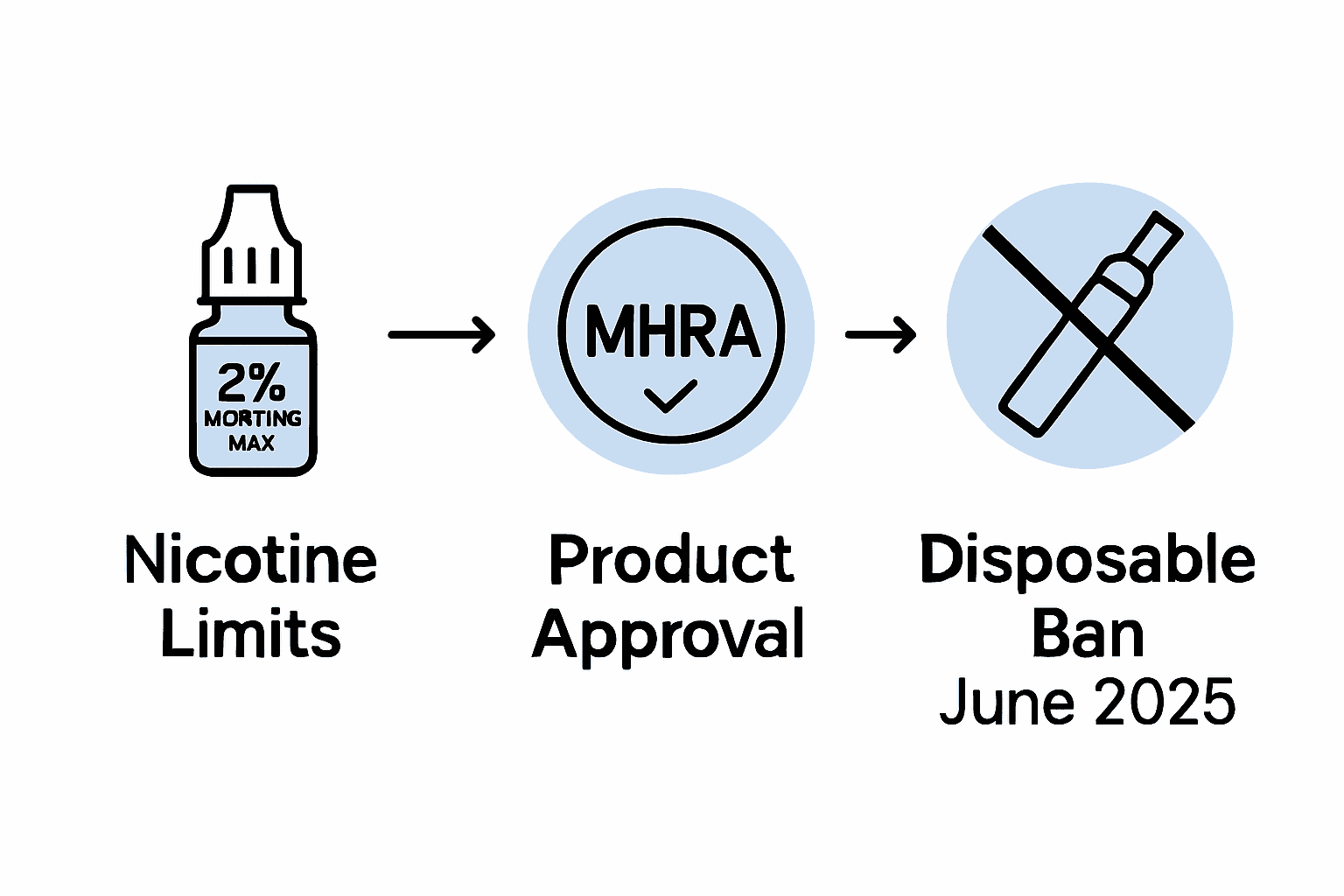
Key regulatory standards encompass multiple dimensions of vaping product control. Manufacturers must submit detailed product notifications to the Medicines and Healthcare products Regulatory Agency (MHRA), including comprehensive information about ingredients, emissions, and potential health impacts. Nicotine concentration is strictly limited to a maximum of 20mg/ml, while packaging must include clear health warnings and child-resistant mechanisms. Additionally, marketing regulations prohibit advertisements that could potentially appeal to individuals under 18, ensuring responsible product positioning.
The table below highlights core regulatory requirements for vaping products in the United Kingdom:
| Regulatory Aspect | Key Requirement | Purpose |
|---|---|---|
| Nicotine Strength | Max 20mg/ml | Consumer safety |
| Age Restriction | 18 years & over | Prevent youth access |
| Packaging | Health warnings, child-resistant | Safety & transparency |
| Product Notification | MHRA submission required | Quality oversight |
Significant recent developments include the upcoming ban on disposable vapes, set to take effect from June 1, 2025. This legislation aims to address environmental concerns regarding single-use plastic waste and mitigate potential youth engagement with vaping technologies. The regulatory approach demonstrates the UK’s nuanced strategy of harm reduction while maintaining stringent consumer protection standards. E-liquid manufacturers must adhere to rigorous quality control protocols, with mandatory testing for harmful constituents and precise labelling requirements ensuring transparency and consumer safety.
Pro Tip: Always verify a vaping product’s regulatory compliance by checking its MHRA notification status and ensuring it displays the required health warnings before purchasing.
Health Risks, Myths and Public Perceptions
Vaping has emerged as a complex topic surrounded by numerous misconceptions and evolving scientific understanding. Research indicates that e-cigarettes represent a significantly less harmful alternative to traditional tobacco smoking, with users exposed to substantially lower levels of toxicants and carcinogens. This nuanced perspective challenges simplistic narratives about vaping, emphasising the importance of evidence-based evaluation rather than knee-jerk reactions or sensationalised claims.
Public perception remains divided, with persistent myths clouding realistic assessments. Nicotine delivery through vaping differs fundamentally from traditional cigarettes, offering users greater control and potentially reduced health risks. While concerns exist about long-term impacts, current scientific consensus suggests that vaping presents fewer immediate health hazards compared to combustible tobacco. Demographic studies reveal that approximately 3.2 million British adults vape, with the majority being ex-smokers seeking harm reduction strategies. Notably, vaping among younger populations remains relatively low, contrary to popular media narratives.
The scientific community continues to investigate potential long-term implications, acknowledging both the potential benefits and residual uncertainties. Emerging research suggests that while vaping is not entirely risk-free, it represents a harm reduction strategy with significant potential for smokers seeking alternatives. Regulatory bodies and health institutions increasingly recognise the nuanced role of e-cigarettes in public health strategies, moving beyond blanket condemnation towards more sophisticated, evidence-based approaches.
Pro Tip: Approach vaping information critically, always consulting peer-reviewed scientific sources and professional medical advice rather than relying on anecdotal evidence or sensationalist media reporting.
Discover the Right Vaping Solutions Tailored for You in the UK
Understanding vaping and its impact in the UK highlights key challenges such as choosing the right device, navigating nicotine levels, and ensuring regulatory compliance. Many new vapers struggle with selecting products that offer safety, quality, and a pleasant experience that fits their lifestyle. Whether you are a beginner exploring cigalikes and pod systems or an enthusiast seeking advanced mods and diverse e-liquids, it is crucial to have access to trusted products that meet UK laws and deliver consistent satisfaction.
Explore a regulated and comprehensive selection at Vapourism, your dedicated UK online retailer offering over 112 authentic brands and expertly curated vaping kits, nic salts, and shortfills.

Start your vaping journey or upgrade your setup with confidence. Visit Vapourism now for fast, tracked next-day delivery and expert support available every day. Take control of your vaping experience with verified products designed for your needs and desires.
Frequently Asked Questions
What is vaping and how does it differ from traditional smoking?
Vaping involves inhaling vapour produced by electronic devices that heat e-liquids. Unlike traditional smoking, which combusts tobacco, vaping eliminates many harmful combustion byproducts and allows users to control nicotine concentrations and flavours.
What are the different types of vaping devices available?
Vaping devices include cigalikes (beginner-friendly), vape pens (for intermediate users), pod systems (compact and easy to use), and mods (advanced with extensive customisation). Each type caters to different user preferences and levels of experience.
How do I choose the right e-liquid for my vaping device?
When selecting an e-liquid, consider the ratio of propylene glycol (PG) to vegetable glycerin (VG) based on your device’s specifications. Higher PG ratios offer stronger throat hits, while higher VG ratios produce denser vapour. Always match the e-liquid viscosity with your device to ensure optimal performance.
What are the main health risks associated with vaping?
While research indicates that vaping presents fewer immediate health risks than traditional smoking, it is not entirely risk-free. The long-term effects of vaping are still being studied, but it may serve as a harm reduction strategy for smokers seeking alternatives. It’s important to consult scientific sources and medical advice for informed decisions.